

Significant downside risks to economic growth and higher inflation – that is the combination of news unfolding in the Australian economy over the past month.
The volatility in sentiment and economic conditions as the result of developments in the Middle East war is making it difficult for policy makers, business, governments and householders to plan ahead with any degree of confidence. Add to this the interest rate hikes from the RBA in February and March, and the expectation of more to come, and the negativity surrounding sentiment is understandable.
There has been only limited hard economic data that captures the impact of the oil and interest rate double-whammy on the economy. Indicators that have been released are for consumer confidence and business conditions, both of which have weakened markedly.
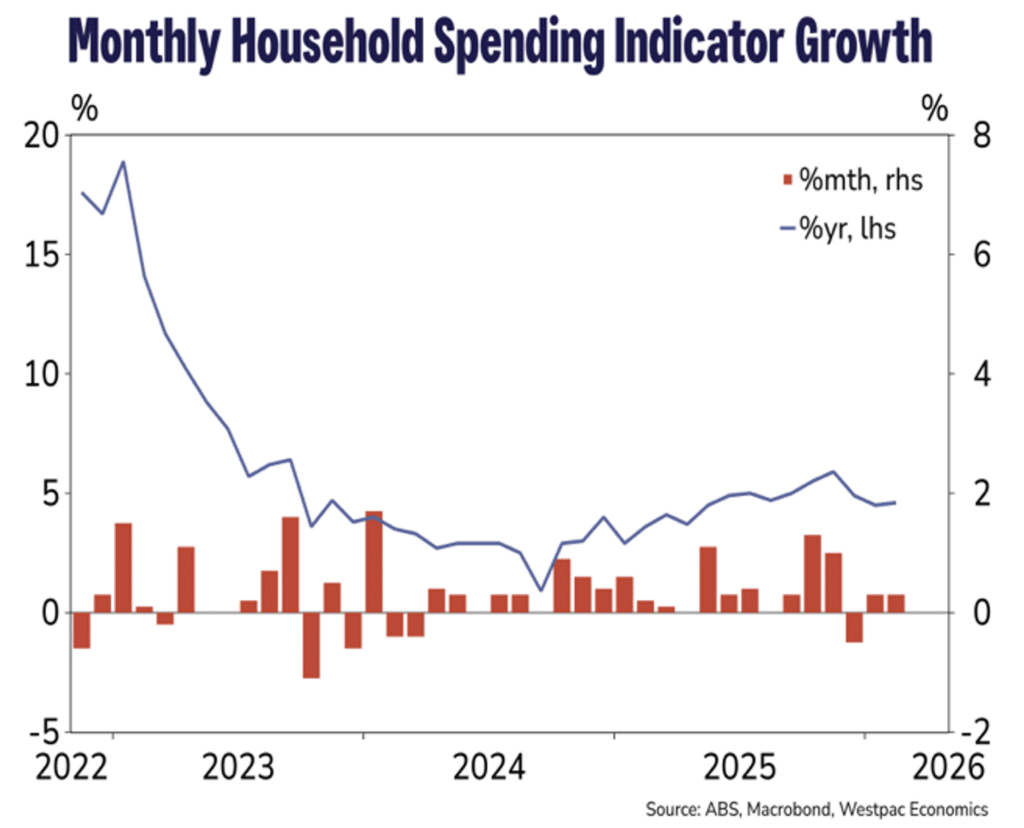
Ahead of the oil shock, the economic news was pointing to a slowing in economic growth with household spending a main source of softening activity.
The next few weeks will see a raft of critical news – March quarter inflation (due 29 April), the RBA meeting (4 -5 May) and the Federal budget (12 May) will all help guide economic conditions. The RBA meeting includes the Statement of Monetary Policy which covers analysis of economic conditions and updated forecasts. The Federal Budget is likely to see major reforms, including in tax policy, which is likely to see a pullback in the contribution to GDP growth of public demand. The NDIS cuts are a signal of the likely budget tightening.
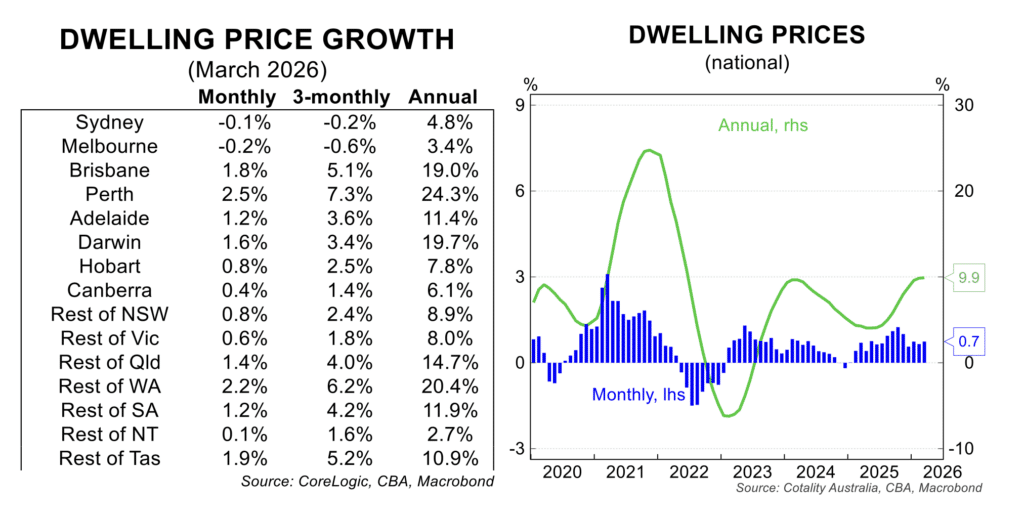
Changes in house prices remain varied from city to city. Prices in Melbourne and Sydney are edging lower, while price growth remains strong in Perth, Adelaide and Brisbane, although the pace of increase is slowing.
Global economic conditions are hostage to the oil market with inflation pressures and monetary policy deliberations of most central banks still evolving. Suffice to say, the supply and price of oil will remain the focus.
Key data
Below is an update of key trends in the economy:
- Household spending is slowing. It rose a tepid 0.3 per cent in both February and January but this followed a fall of 0.5 per cent in December. Household spending is being held back by high interest rates and the fear of more hikes, higher inflation eating into spending power and broader consumer caution given the economic and geopolitical backdrop. The March data (due 5 May) will include the initial impact of the petrol price shock.
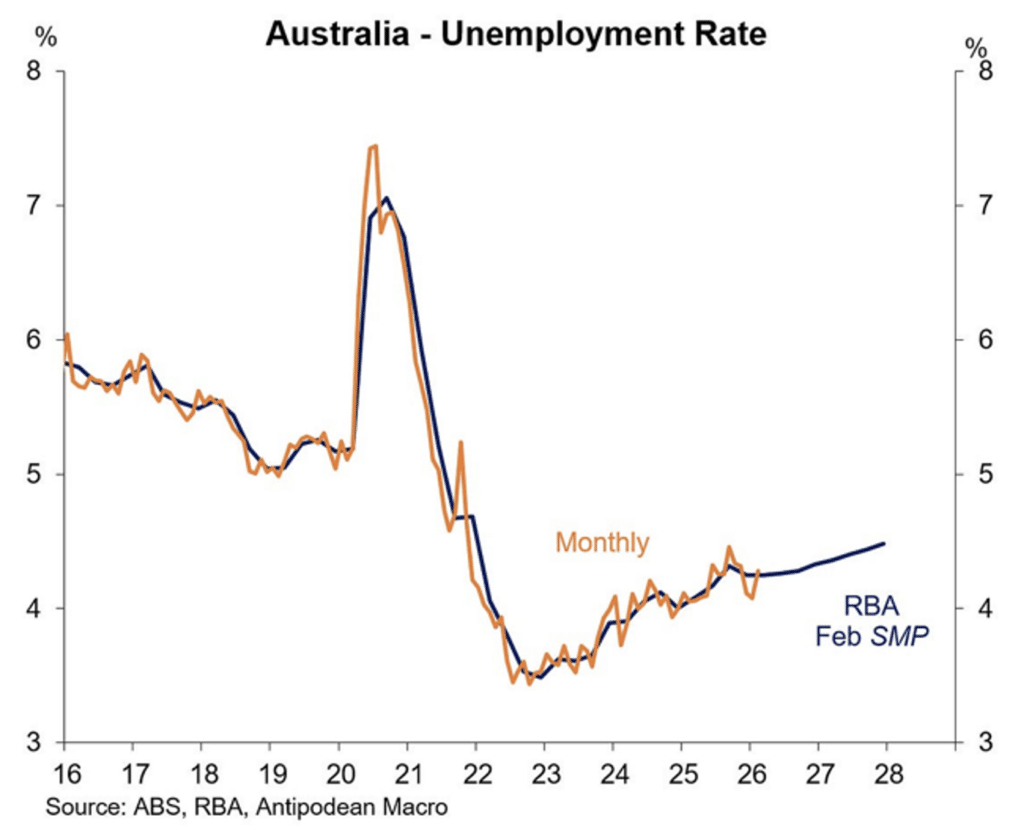
- The unemployment was steady at 4.3 per cent in February and has been in a 4.0 to 4.5 per cent band for the past 18 months. The unemployment rate is broadly consistent with the February forecasts from the RBA which assumed a rise to 4.6 per cent in 2028. Employment growth remains moderate although the growth in aggregate hours worked has been slowing.
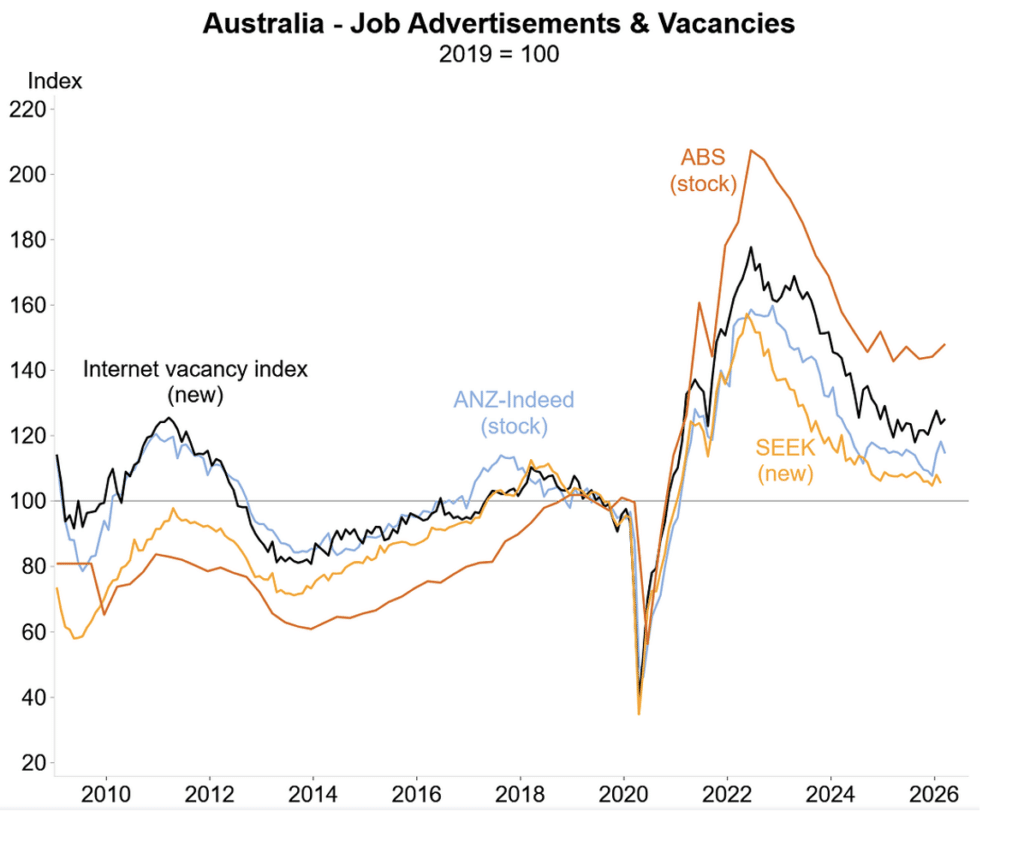
- The number of job vacancies has been broadly flat, with a series of small increases being followed by small falls. The number of vacancies is consistent with further moderate increases in the unemployment rate over the remainder of 2026.
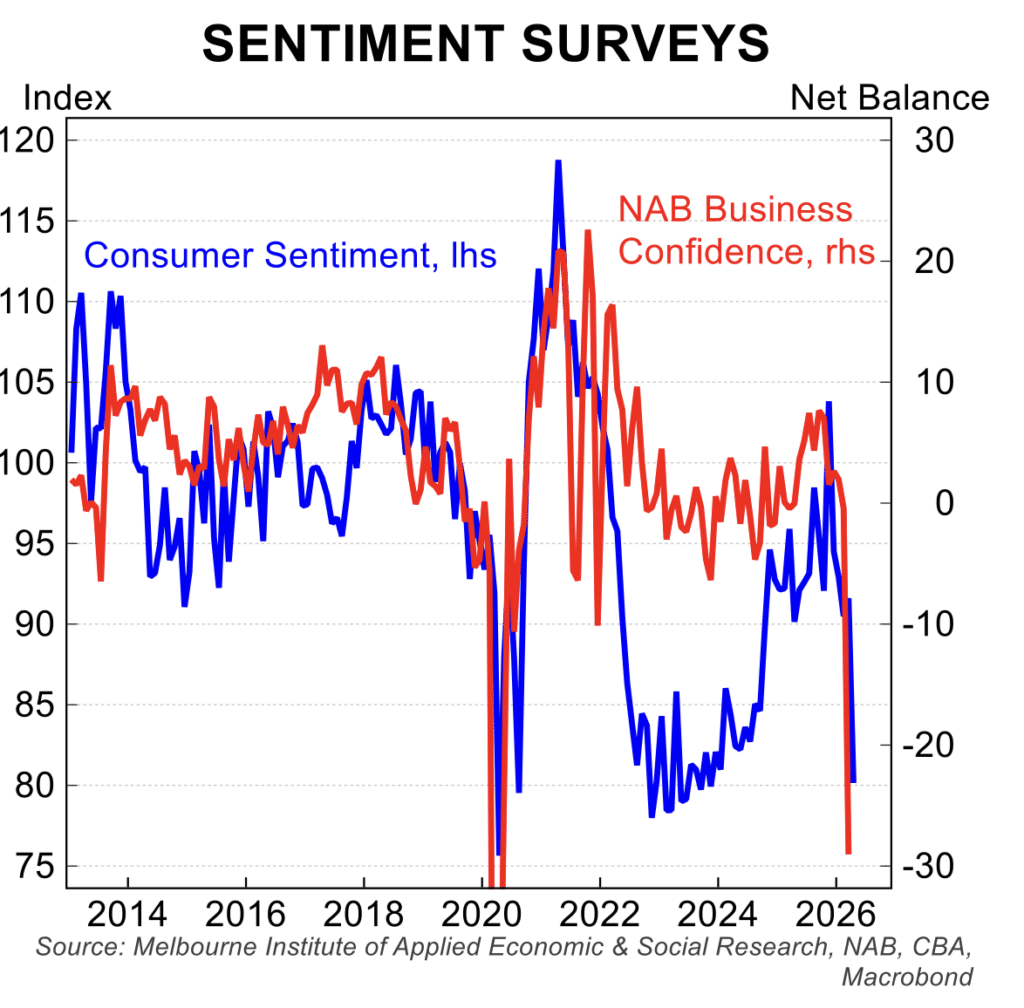
- Business confidence plummeted 29 index points in March with the oil and interest rate issues at play. The chart below tracks business confidence and consumer sentiment. Business confidence is at a level similar to the low points of the COVID pandemic and GFC.
- Both the Roy Morgan – ANZ index of consumer confidence and the Westpac- Melbourne Institute index of consumer sentiment have fallen sharply – interest rates and the effect of the petrol price hike have depressed the consumer. Expect to see a material slowing in household spending in the months ahead.
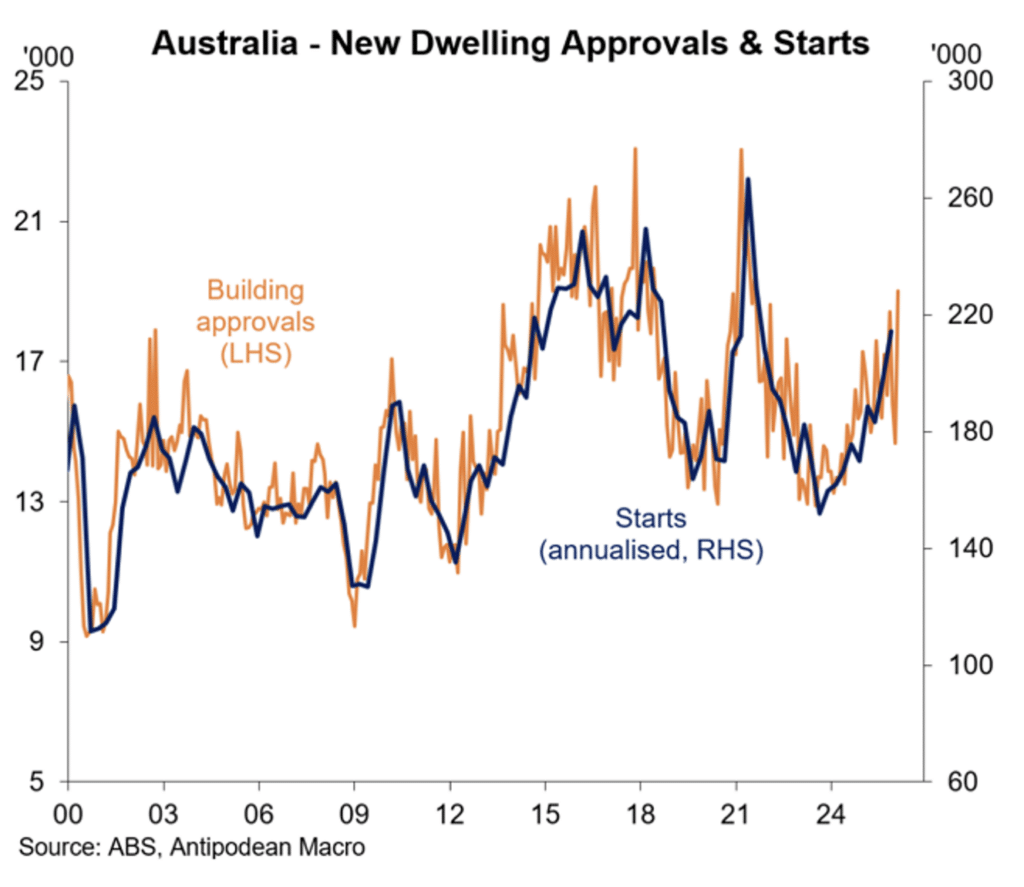
- New dwelling building approvals again look favourable for the economy. The number of approvals reversed the recent weakness with a huge 29.7 per cent monthly increase in February. This took approvals to a 5 year high and bodes well for new construction and extra dwelling supply in the next few years. The sharp rise was driven by the approval of a number of large scale apartment projects in Victoria.
RBA monetary policy and the current market pricing for the cash rate
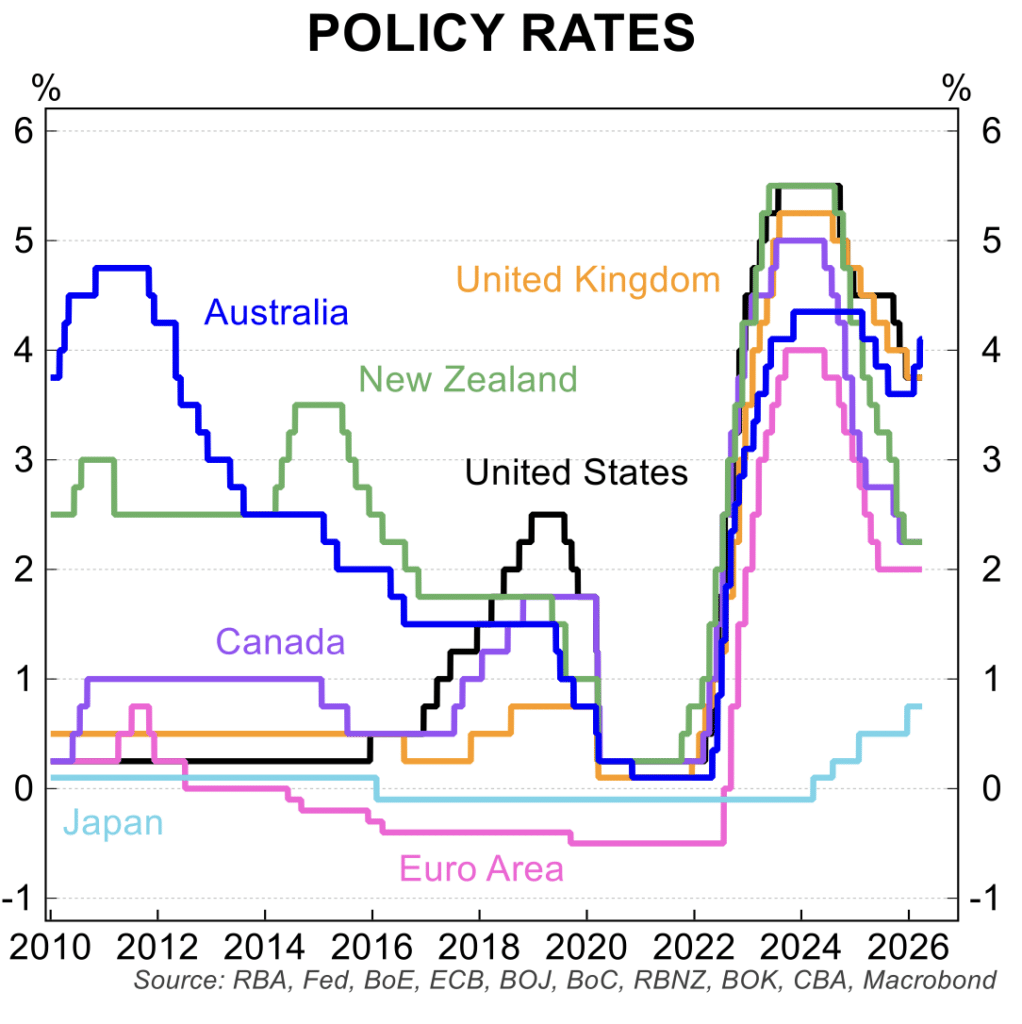
There has been volatility in the market for future RBA interest rate settings. This has been in line with the swings in news from the Middle East, including changes in the oil price. Suffice to say, the market has approximately two further 25 basis point interest rate hikes priced in by the end of 2026, a scenario that would see the cash rate peak at 4.60 per cent from the current 4.10 per cent. Key issues for the RBA are the need for tighter policy to combat inflation versus the need to keep rates lower to counter the clear negative effects on growth of past hikes and the slowing in economic growth which are expected to feed into higher unemployment.
Around the world, monetary policy settings have been broadly stable as central banks deal with many of the issues confronting the RBA.
House prices
At the national level, house prices are continuing to rise, but the pace of increase is slowing. In the first three months of 2026, the average monthly rise was 0.7 per cent, down from average increases of 1.0 per cent in the middle of 2025 (see blue bars in the chart below). There remain extreme differences between cities. In the last three months, prices are actually falling in Sydney and Melbourne; there are moderate rises in Hobart and Canberra and particularly strong increases in Darwin, Adelaide and Perth.
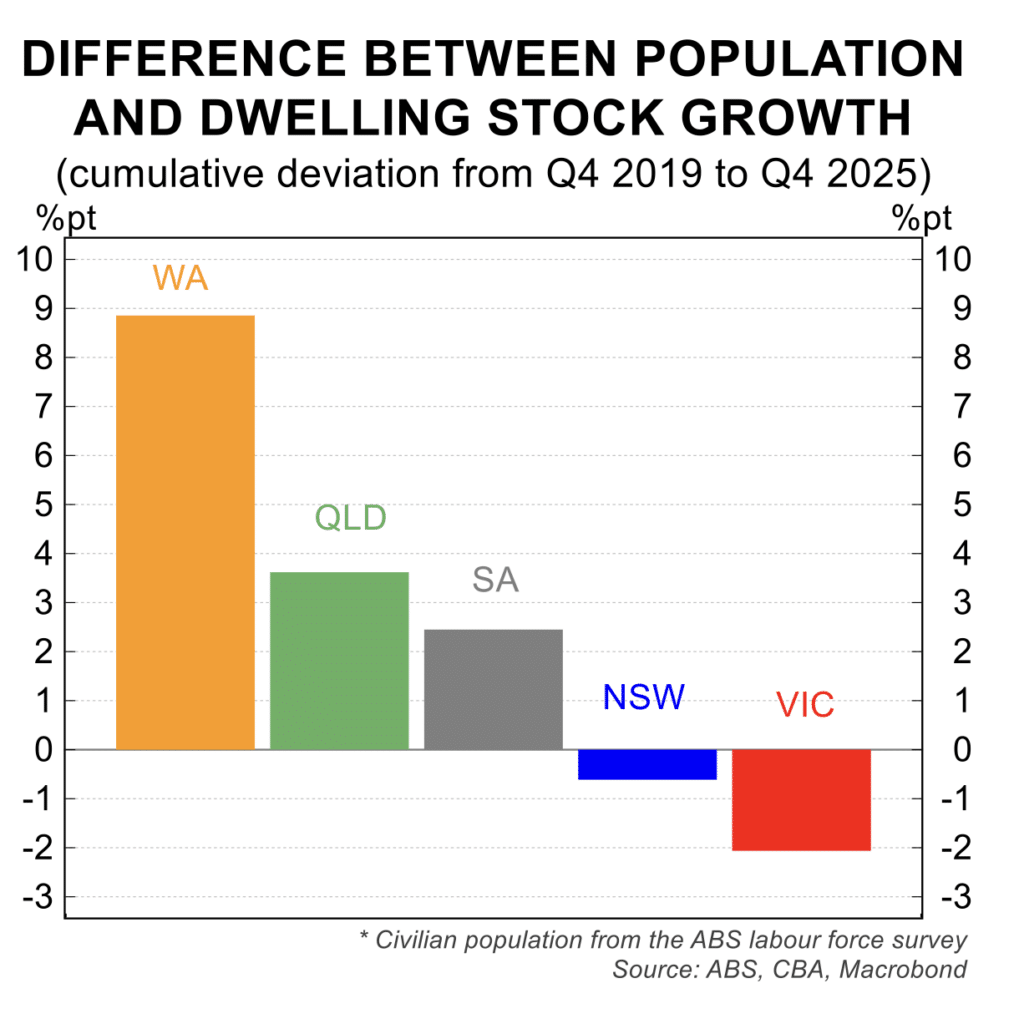
Divergences in house prices are due to significant differences in supply and demand imbalances from city to city. The chart below the difference between the change in the number of dwellings in each city relative to the change in population since the end of 2019. The cities that have had the strongest population growth relative to the increase in dwelling supply have recorded the strongest price increases.
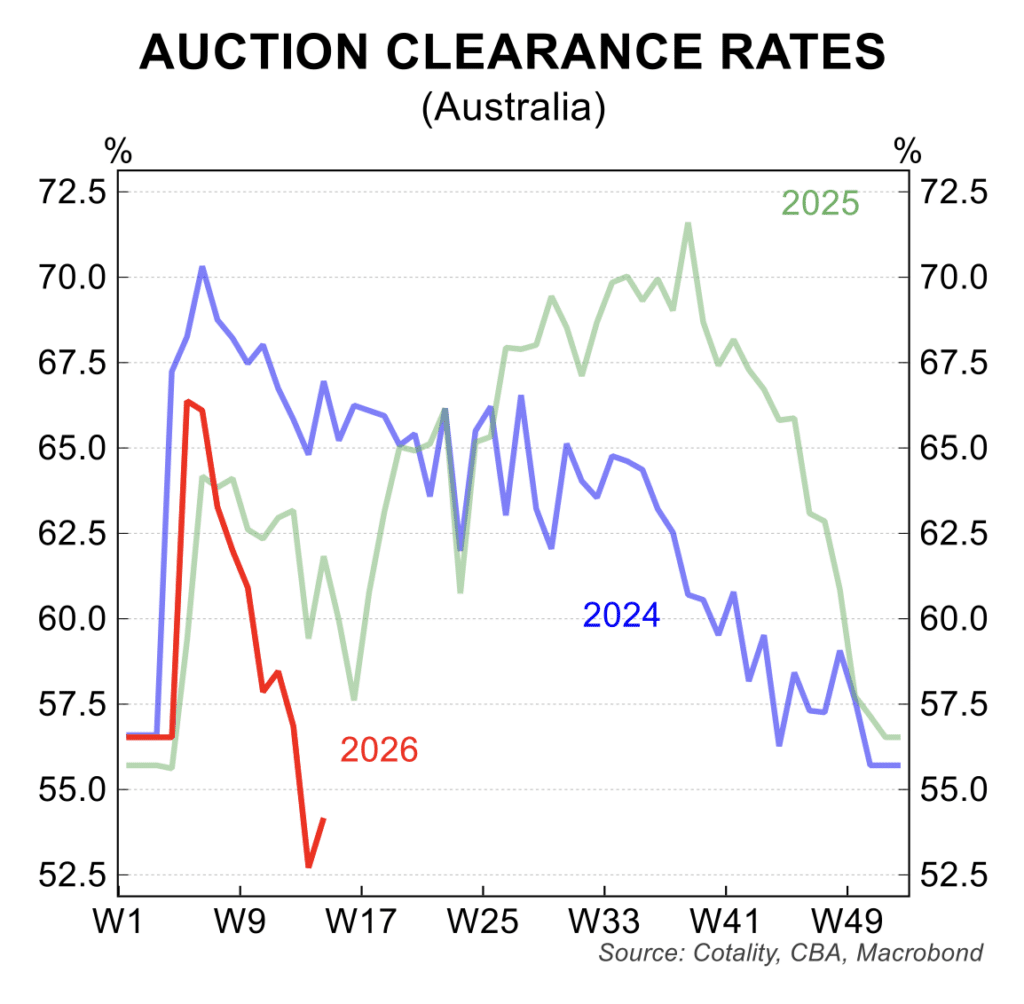
Signs of cooling in the housing market is evident in the auction clearance data, which in early 2026 is materially weaker than in 2024 and 2025.
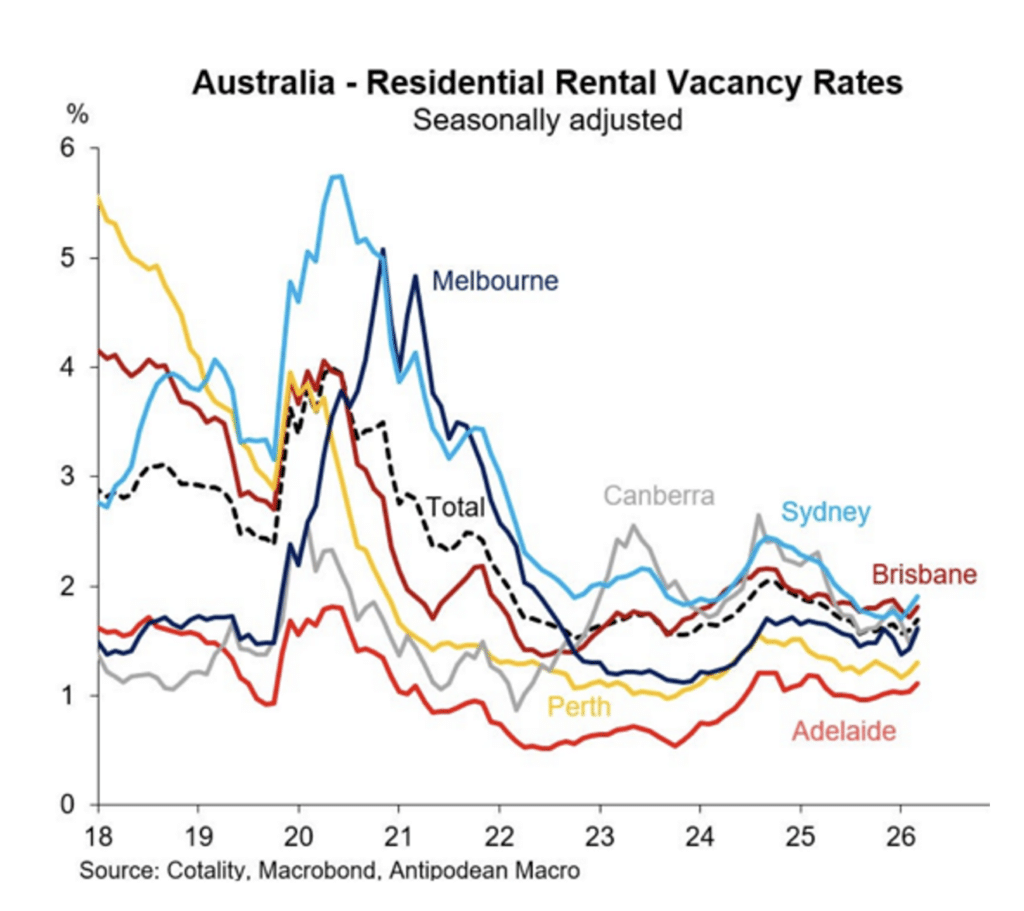
The rental market remains tight, with vacancy rates in most cities at or near record lows. The shortage of dwellings in impacting the rental market in much the same way as it is impacting prices.
Stephen Koukoulas is Managing Director of Market Economics, having had 30 years as an economist in government, banking, financial markets and policy formulation. Stephen was Senior Economic Advisor to Prime Minister, Julia Gillard, worked in the Commonwealth Treasury and was the global head of economic research and strategy for TD Securities in London.