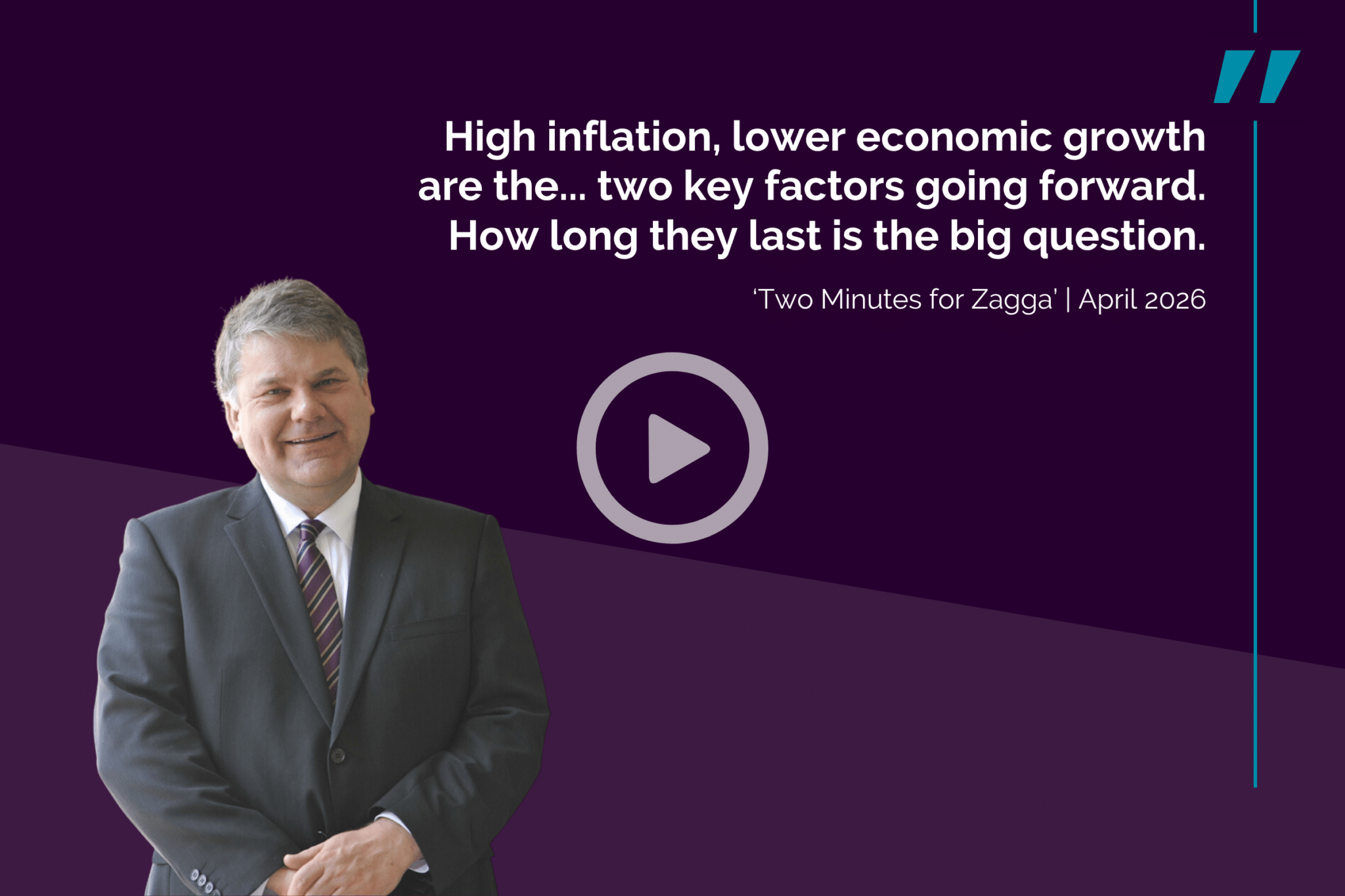
• Private credit demand rising as volatility pressures traditional portfolios
• US corporate lending risks driving negative sentiment toward the asset class
• Australian real estate-backed private credit offers secured, asset-backed exposure


As global volatility reshapes portfolios, private credit is drawing increased attention – but not all strategies carry the same risks, particularly when comparing US corporate lending to Australia’s real estate-backed market.
The world feels increasingly fragmented. Escalating conflict in the Middle East is disrupting global energy supplies, adding to inflationary pressures across the economy, and putting further upward pressure on interest rates. At the same time, equity markets continue to swing sharply on each new headline.
For investors, it’s a challenging time. Volatility is now a feature, not a temporary glitch and traditional 60/40 portfolios are feeling the strain.
Against this backdrop, it is no surprise that private credit has captured attention as a potential safe harbour. But with that attention has come scrutiny – particularly in the United States, where concerns around liquidity and systemic risk have become increasingly topical with a number of large global private credit providers gating redemptions.
These concerns are valid. But they also risk painting the entire asset class with too broad a brush. Because the reality is simple: not all private credit is created equal.
A tale of two markets
The current debate around private credit is heavily skewed by developments in the US, a market that has grown rapidly over the past decade to become the largest and most mature globally.
Today, the US market is heavily concentrated in corporate lending, often involving leveraged borrowers and complex capital structures. While this offers attractive yields, the sector is increasingly under scrutiny, with concerns around liquidity, valuations, and potential systemic risks.
That segment of the market plays an important role. But it is fundamentally different from real estate private credit in Australia, which is secured and underpinned by physical assets in one of the most robust and resilient property markets in the world.

The total value of residential real estate in Australia now exceeds $12 trillion1. This is three and a half times larger than our local share market, with the ASX 200 having a total market capitalisation of approximately $3.5 trillion. With 20 years of sustained growth, and strong tailwinds to drive future development, our property market continues to offer attractive investment opportunities.
Despite the uncertainty around construction costs and supply chains, the underlying fundamentals remain compelling. A sustained housing undersupply and a mounting, nationwide supply-demand imbalance further strengthens the investment case.
Private credit has an increasingly important role to play in Australia’s property sector. For borrowers, it provides flexible funding and specialist expertise, essential in today’s operating environment. While for investors, it can deliver uncorrelated diversification, risk-adjusted returns, and steady income.
Today, Australia’s private credit market is valued at more than $200 billion, and growing, with approximately $85 billion allocated to commercial real estate lending2. Yet, even at this scale, it remains a relatively small proportion of the broader lending market – offering significant room for growth without the same systemic concentration risks seen offshore.
This distinction matters. Because when investors hear “private credit risk”, they are likely to be thinking about a completely different product.
What makes real estate private credit different?
To understand why not all private credit is created equal, investors need to look beyond the label and examine the underlying mechanics.
Security Matters:
Real estate private credit is typically secured by a mortgage over real property. That means investors have a direct claim over physical property, rather than relying solely on a company’s earnings or cash flow.
Conservative leverage provides a buffer:
Disciplined lenders in this space typically operate at conservative loan-to-value (LVR) ratios. Zagga, for example, predominantly lends at LVRs below 65%. This creates a meaningful equity buffer that acts as a shock absorber against market volatility.
Income is contractual:
Unlike equities, where returns are driven by market sentiment and growth expectations, private credit typically delivers income through contractual interest payments. This provides a level of predictability and low correlation to daily market movements – providing enhanced diversification in portfolios.
A market in demand:
Australia faces a structural housing shortage, supported by strong population growth and migration. Demand continues to outstrip supply, rental vacancies remain tight, and government policy is increasingly focused on accelerating housing delivery. These are not cyclical tailwinds – they are structural drivers.
Navigating uncertainty with clarity
There is no doubt that the global environment remains uncertain. Geopolitical tensions, inflationary pressures, and market volatility will continue to test investor confidence in the months ahead.
As volatility becomes the norm, investors are increasingly shifting their focus – from growth and capital appreciation toward income, defence, and preservation.
In this context, private credit, particularly real estate-backed strategies, is playing an increasingly important role. This is not a temporary reallocation. It reflects a structural shift in how portfolios are being constructed.
But uncertainty also sharpens the focus on fundamentals. It forces investors to ask better questions – not just about returns, but about risk, structure, and governance.
Because beneath a single label sits a wide spectrum of investment opportunities and varying degrees of risk. In today’s environment, understanding those distinctions is critical.
Not all private credit is created equal. For those willing to look a little deeper, that distinction can unearth compelling investment opportunities that move portfolios from risk to resilience.
1. Australian Bureau of Statistics
2. Alvarez & Marsal, Australian Private Debt Market Review, November 2025
This article was developed in collaboration with Zagga, a Stockhead advertiser at the time of publishing and additionally published in The Daily Telegraph, The Herald Sun, The Courier Mail, NT News, The Mercury, The Cairns Post, Townsville Bulletin, Gold Coast Bulletin, Geelong Advertiser, The Toowoomba Chronicle and The Adelaide Advertiser.
The views, information, or opinions expressed in this article are solely those of the interviewee and do not represent the views of Stockhead.
Stockhead has not provided, endorsed or otherwise assumed responsibility for any financial product advice contained in this article.